

.png)


And many more...
Simplify and streamline the protection of your car with ease!


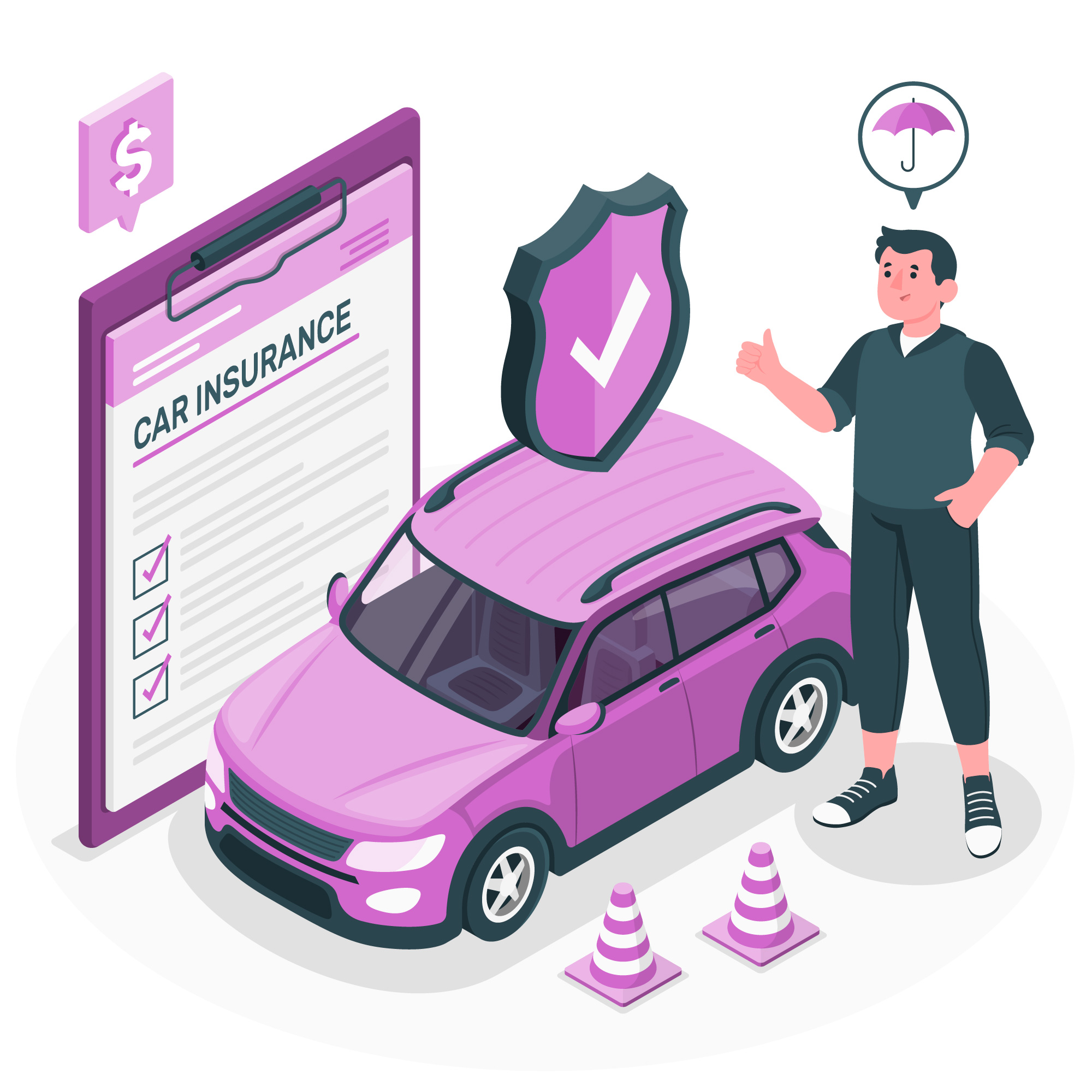
Car insurance acts as a financial shield, offering coverage for you, your vehicle, and third parties, protecting against damages and injuries in the event of accidents.
In accordance with the Motor Vehicles Act of 1988, every car owner in India is mandated to have vehicle insurance before hitting the road. Failure to comply may lead to penalty charges and, in certain instances, imprisonment.
Beyond the legal requirements, a car insurance policy serves as a safeguard for your financial interests in the unfortunate events of permanent, partial, or total disability, as well as the death of the owner/rider and third parties involved..
And many more...
A standalone own-damage car insurance plan provides coverage exclusively for the damage sustained by the insured's four-wheeler in various situations, including road accidents, natural or man-made calamities, fire, explosion, theft, and other mishaps. The key feature of this type of insurance is that it offers the insured flexibility in choosing their insurance provider
Third-party car insurance covers damages and injuries caused by the insured vehicle to a third party—either a person or their property. This type of insurance is mandatory under the Motor Vehicles Act, 1988, in India.
Comprehensive car insurance provides coverage for a range of scenarios, including damages to one's own car, third-party legal liability, theft, and personal accident coverage. Additionally, it extends coverage to natural and man-made disasters such as fire, earthquakes, tornadoes, damage caused by animals, falling objects, and more. .

The process of purchasing or renewing car insurance is straightforward, fast, and convenient.

If your vehicle is damaged due to an accident, fire, or self-ignition, you are covered by the insurance policy.

Comprehensive car insurance offers coverage against theft and vandalism, ensuring that you can recover your financial losses if your car is stolen.

This feature makes car insurance more convenient to avail of repair services in case of any damage to your car.

If your car is involved in an accident that results in damage or loss to the property of any third parties, you are protected.

According to the Indian Motor Vehicles Act, having third-party insurance is a mandatory requirement for all vehicles. Additionally, opting for comprehensive car insurance not only helps you stay compliant with regulations but also provides peace of mind.
This feature makes car insurance more convenient to avail of repair services in case of any damage to your car.
If your car is damaged due to a flood, fire, or earthquake, your car insurance policy will come in handy to claim for the damages.

One of the major advantages of having car insurance is no claim bonus (NCB). It can be available as a discount on your premium, which can make car insurance purchases more affordable.

In case your vehicle is damaged due to an accident, fire, or self-ignition, you are covered.
Inclusions refer to the risks that are covered under the car insurance policy. Here are some popular inclusions in motor insurance:
Your car insurance policy covers you against financial losses that may occur during an accident or theft. However, there are certain events, which your policy may not cover:
Add-on covers are additional benefits added to your car policy that cover the car against unforeseen expenses. Add-ons, also known as riders, can be included in your insurance policy by paying an extra premium.
There are various types of add-ons offered by insurance companies listed as follows, but you should select the one according to your specific requirements.
While comparing car insurance premiums is essential for budget considerations, it's equally crucial to assess coverage comprehensively. The lowest-cost policy may not offer adequate protection. Factors like coverage options, claim process efficiency, customer reviews, deductibles, add-ons, network garages, and policy terms should be considered. Striking a balance between cost and coverage ensures a well-informed decision.
Begin by selecting the type of policy suitable for your four-wheeler. Utilize online platforms to compare various car insurance plans. Comparing plans facilitates an informed decision, helping you choose the best car insurance that aligns with your budget and specific needs.
The Insured Declared Value (IDV) signifies the maximum coverage liability assumed by the insurer. In the event of theft or total loss of the four-wheeler, the maximum claim amount equals the policy's IDV. During comparisons, ensure you assess IDV quotes from different insurance providers to secure the best sum insured for your insurance policy.
When buying insurance, don't just focus on the benefits. Also, thoroughly understand what the policy doesn't cover (exclusions). This ensures you make informed decisions, prevent misunderstandings, and know the limitations of your coverage.
When purchasing a motor insurance policy, it's advisable to inquire with your insurer regarding the claims process. Additionally, it's important to assess the claim settlement ratio of the insurer. The claim settlement ratio of a company provides insight into the percentage of insurance policies that are successfully settled by reimbursing claims within a given year.
The following are key factors that determine the premium of a car insurance policy
In the event of a loss, the following are key points on how to claim your car insurance:
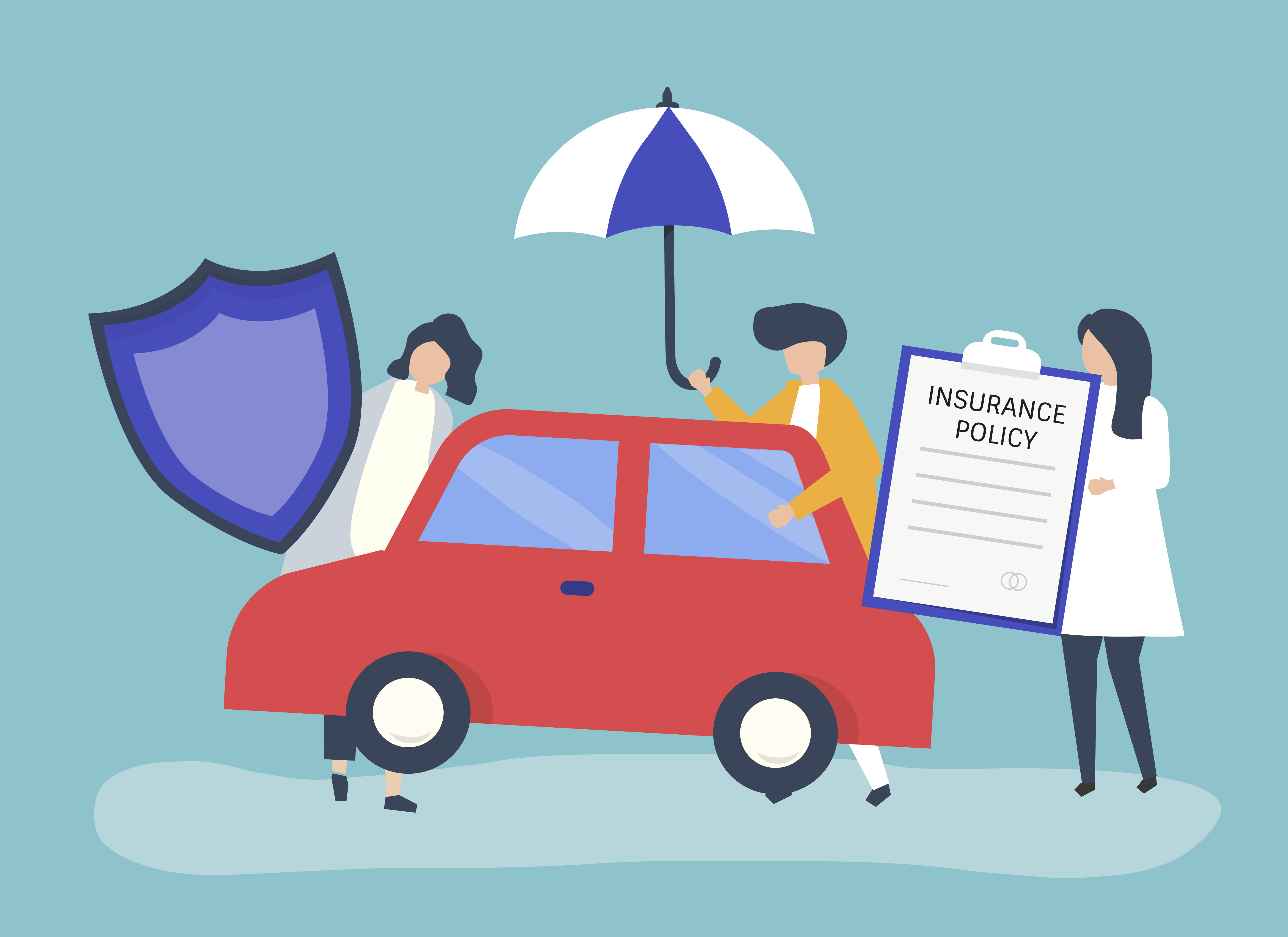
 Instant Policy Right, Coverage & Price 100% Claim Assistance Renewal Management
Liability Only Policy (Statutory requirement)
Comprehensive Policy (Liability Only Policy + Damage to owner’s Vehicle usually called O.D Cover)
Fire, Explosion, Self-Ignition, Lightning
Burglary/Housebreaking / Theft
Riot & Strike
Earthquake
Flood, Storm, Cyclone, Hurricane, tempest, inundation, hailstorm, frost
Accidental external means
Malicious Act
Terrorism acts
While in Transit by Rail/ Road, Inland waterways, Lift, Elevator, or Air
The following factors help determine the premium:
Make model and year of manufacturing of vehicle
Place of registration
Cubic capacity of the vehicle
Individual ownership/company-owned
Seating capacity
Claim status and No Claim bonus
Add on covers
The premium may be lesser of one insurer but may have higher deductibles, lower coverage, and lower IDV, which will adversely impact the insured in the event of claim settlement.
This offers complete coverage of the vehicle without factoring in depreciation. It means, that if your car gets damaged following a collision, you will receive the entire cost from the insurer without deduction of depreciation. It covers all-fiber, metal, and plastic parts. There are other add-on covers that can be clubbed together like engine cover, tire cover, return to invoice, RSA, personal belongings, etc.
It is a discount available in the renewal premium offered by insurance companies if a vehicle owner has not made a claim during the last term of the car insurance policy.
Covers the owner of the vehicle against any legal liability arising out of any property damage or bodily injury to third parties. The limit for third-party property damage cover is restricted up to a maximum of Rs.7.5 lakh, whereas there is no limit restriction on third-party bodily injuries.
It is the first amount to be borne by the insured for each and every claim reported. The insurance company has decided that you will pay at the time of a claim settlement. For sub-1500 cc vehicles, it is Rs 1500 and for vehicles above 1500CC it is Rs. 2000.
It covers engine damage due to water ingression or oil leakage.
It is the maximum amount to be paid by an insurer at the time of claim settlement. It is the sum insured and is fixed at the commencement of each policy period.
No.
Total loss means accidental damage to the vehicle where the insurance company’s share is more than 75% of the IDV.
While generally, it is three times, it could vary from company to company.
Normal wear and tear
Not having a valid driving license during an accident
Driving under the influence of intoxicating liquor/ drugs
Accidents taking place beyond geographical limits
If the vehicle is being used for unlawful purposes
Electrical/ mechanical Breakdowns
This covers the cost of replacement when a key is lost or stolen.
The car owner is paid a fixed daily allowance for a certain number of days if the car has been taken to the workshop.
Insurance companies offer a discount on the premium for installing anti-theft devices approved by the Automobile Research Institute of India (ARAI). These devices enhance security and reduce the chances of making a claim, hence adding the benefit of the discount.
Yes, but an inspection of the vehicle is required. However, No Claim Bonus (NCB) can be protected till the expiry of 90 days from the date of expiry.
Legally anyone driving a car must hold a valid driving license. In this scenario, it is the owner's responsibility to ensure that his vehicle is being driven by someone with a valid driving license and that the driver is not under the influence of alcohol or drugs.
According to the Supreme Court order, IRDA has mandated all general insurance companies to offer multi-year third-party insurance to all motor vehicles sold after 1st September 2018. Therefore, instead of single third-party liability plans, insurance companies will offer 3-year third-party liability plans for cars and 5-year third-party liability plans for two-wheelers.
You will have to inform the insurer about this, as the cost of the premium will differ based on the fuel type of your car.